For manufacturers and D2C brands operating complex IT landscapes

We design D2C structures that scale on PlentyONE

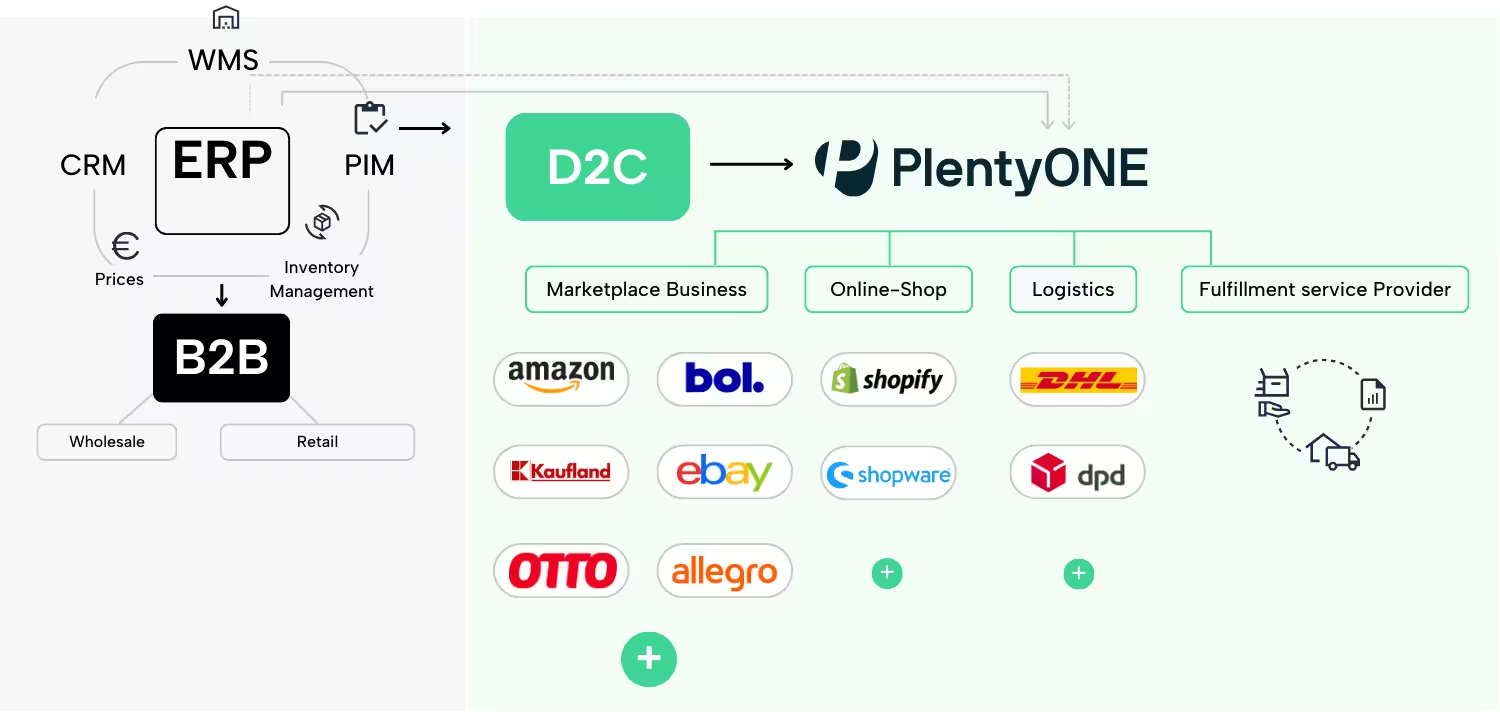
We embed PlentyONE into existing systems to enable stable D2C operations and scalable growth.

Entering D2C often feels easier than operating it afterwards.

Where D2C setups start to struggle

Each new marketplace increases operational complexity.
More data, more exceptions, more coordination.
Manual work grows faster than revenue.
Processes exist — but don’t scale reliably.
Every expansion feels like a new project.
Instead of extending structure, teams rebuild processes.
Internationalisation looks simple in theory.
In practice, systems, logistics and workflows don’t align.
PlentyONE is implemented — but not fully leveraged.
The system is there. Operational clarity isn’t.
Adding more technology rarely creates stability. Stability requires structure, internal capability — and the right external expertise.

PlentyONE is powerful — but its impact depends on how systems and processes are structured and run every day.

D2C PlentyONE Integrations

How we structure scalable D2C on PlentyONE

Define the Target Architecture for PlentyONE

Before building, we map system responsibilities, data ownership and structural dependencies around PlentyONE.
The target setup is documented and validated to prevent architectural drift.
Stability requires clarity at system level.

Start with a Structured MVP

Launch with a stable MVP before expanding scope.
We focus on essential processes first — clean data flows, reliable order handling and controlled integrations.
Additional complexity is introduced only after the foundation proves stable.

No Critical Custom Dependencies

Custom development can add value — but not at the cost of stability.
We prevent single points of failure and fragile plugin dependencies.
Robust architecture always takes priority over convenience.

Build Internal Capability

We work closely with your team to build operational understanding and system confidence.
You gain clarity and control in day-to-day operations — while we remain available for complex technical challenges.

Scale on Stable Foundations

New marketplaces, countries or workflows are added on stable structures — not experimental builds.
Scalability is designed, not improvised.

This is how we start

Step 1

Analyze the PlentyONE Architecture

We assess systems, integrations and structural dependencies around PlentyONE to establish a clear technical baseline.
Step 2

Define Operational Priorities

We define which processes, workflows and integrations in PlentyONE must be prioritized, stabilized and systematically optimized.
Step 3

Scale PlentyONE in a Controlled Way

On stable foundations, we expand marketplaces, workflows and integrations deliberately and according to a defined roadmap.